
Three Critical Factors for Reliable, Long-Term Sealing Performance

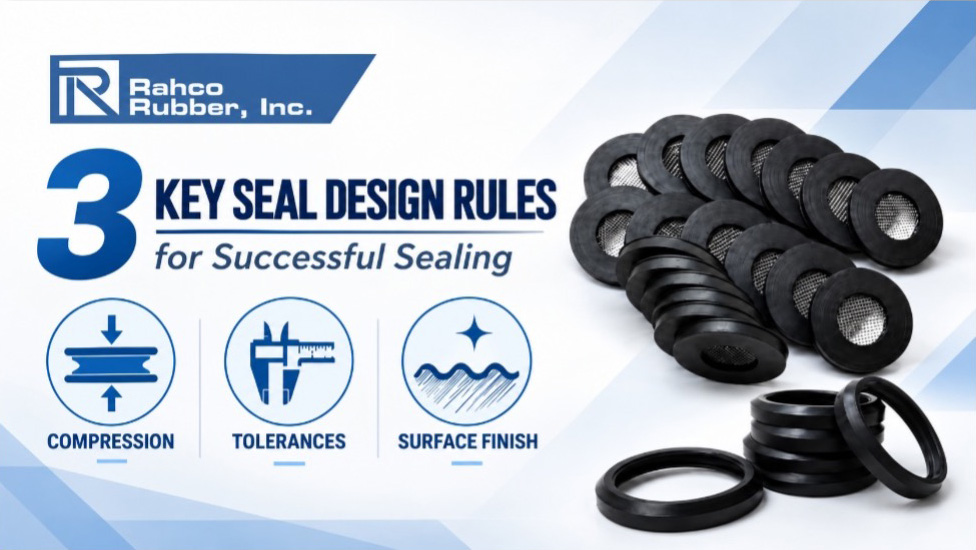
Selecting the right rubber compound is essential to successful sealing, but even a high-performance elastomer can fail prematurely if critical design requirements are overlooked. At Rahco Rubber, we not only custom-formulate rubber compounds to meet demanding performance requirements but also emphasize three fundamental design considerations: compression, dimensional tolerances, and surface finish. Together, these factors play a critical role in achieving consistent sealing performance, long-term reliability, and durability.
1. Compression: Achieving the Right Seal

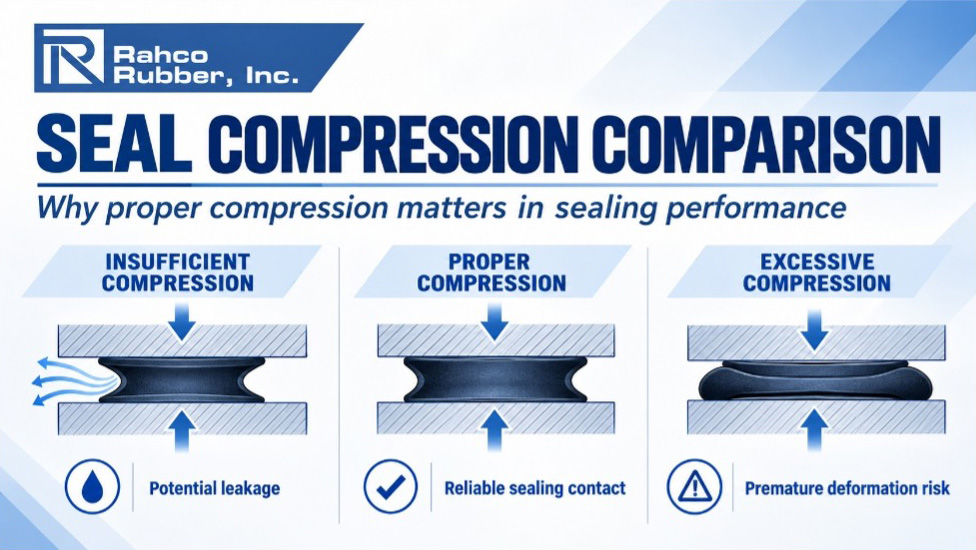
Compression is the amount a rubber seal is deformed when installed between mating surfaces. Proper compression creates the contact pressure needed to establish an effective seal.

  • Insufficient compression may prevent adequate contact with the mating surfaces, allowing leakage.
  • Excessive compression can overstress the material, accelerate permanent deformation, and shorten seal life.
  • Proper compression helps maintain sealing contact while accommodating normal dimensional variations and operating conditions.

The appropriate compression depends on the seal geometry, rubber compound, and application requirements.

2. Tolerances: Maintaining Dimensional Consistency

Dimensional tolerances define the allowable variation in a seal’s dimensions and the components with which it interfaces.

Even small deviations in seal dimensions, groove geometry, or mating components can change the amount of compression applied to a seal.  Controlling tolerances helps ensure:

  • Consistent sealing contact across manufactured parts.
  • Proper fit and assembly.
  • Reliable performance under specified operating conditions.

Tolerance control is particularly important in precision assemblies and demanding industrial applications where dimensional variation can compromise sealing performance.

3. Surface Finish: Creating an Effective Sealing Interface

Surface finish refers to the texture and condition of the surfaces that contact the rubber seal. Even when compression and tolerances are correct, an unsuitable mating surface can create leakage paths or contribute to premature wear.

Important considerations include:

  • Surface roughness: Excessively rough surfaces can prevent effective sealing contact.
  • Surface imperfections: Scratches, grooves, and machining marks may create leakage paths.
  • Application requirements: Static and dynamic seals can require different surface finishes to maintain performance.

The objective is not necessarily the smoothest possible surface, but the appropriate finish for the sealing material, geometry, and operating environment.

Why Engineers Care

For engineers designing OEM components, successful sealing requires more than choosing an elastomer with the right physical and chemical properties. Compression, tolerances, and surface finish work together to influence sealing effectiveness, durability, and reliability. Overlooking any one of these factors can contribute to leakage, premature seal failure, increased maintenance, and costly equipment downtime. Understanding these relationships early in the design process helps engineers make better material and dimensional decisions, reduce performance variability, and improve long-term reliability.

Material Selection and Seal Design Work Together

Reliable sealing performance depends on achieving the right balance between material properties, component design, and manufacturing precision. Engineers must consider operating pressure, temperature, chemical exposure, and whether the seal is used in a static or dynamic application. Rubber properties such as hardness, elasticity, and compression set resistance must be compatible with these operating conditions and the seal’s design, as even small deviations can compromise long-term performance, reliability, and durability.

Engineering Reliable Rubber Components with Rahco Rubber

At Rahco Rubber, custom rubber compound development and precision molding help OEMs meet demanding material performance and dimensional requirements.  By matching rubber formulations and manufacturing processes to specific application requirements, Rahco helps customers develop molded rubber components engineered for consistent performance, reliability, and long-term durability. Successful sealing begins with the right material—and the right design.

For the highest quality custom molded parts sealed to perfection, contact Rahco today.